Two Nurses, One Journey
Written by Dan Cripe, RN, BSN & Marcia Cripe, RN
The story that comes after the weight loss
We both took our first GLP-1 injection on the same day. Same medication. Same house. Same clinical knowledge (we're both nurses).
Same outcome? Not even close.
More than two years in, we're still discovering how differently two people can travel the exact same path—and why your experience might look nothing like someone else's, even when you're taking identical doses of the same drug.
This is where we document that messy, real part that doesn't fit into before-and- after photos.
Why This Matters
If you're considering a GLP-1 medication, you've probably read success stories. Lost 50 pounds. Lost 100 pounds. Appetite disappeared. Energy soared. Life changed.
All of that can be true. But what happens after the scale stops moving? What if your experience doesn't match the story you read? What if appetite suppression becomes too strong? What if you lose muscle you didn't want to lose? What if weight loss solves some things and complicates others?
That's the part most journeys skip.
We're not skipping it.
Follow Our Journey
We started GLP-1 treatment together and experienced it very differently. Explore our honest stories about changing food preferences, unexpected body changes, muscle, body image, relationships, maintenance and the realities no before-and-after photo can show.
Two People. One Medication. Two Very Different Stories.
Marcia's Story
I started at about 230 pounds. I had learned to disappear—dark clothes, avoided photos, stayed home more. I wasn't miserable, but I had made myself very small.
Seeing my dad after his GLP-1 weight loss shifted something. In that moment, I decided I was going to try it.
On May 10, 2024, I took my first dose of tirzepatide—with Dan, in our kitchen. What happened next was both simpler and far more complicated than I expected.
The drive to eat nearly evaporated. The weight came off quickly. By mid-2025, I hit about 105–108 pounds—*lower* than where I actually wanted to be.
And suddenly the story became much messier.
There was hair loss (eventually reversed). Muscle I should have preserved. Loose skin. A face that looked older. Fatigue. Shoes that no longer fit. Food that tasted flat.
But there was also something I hadn't anticipated at all:
I became visible again.
Today, I feel best around 112–117 pounds. I love how I dress. I love being smaller. I love feeling like myself.
I can also put on a bathing suit and feel exposed by loose skin.
Both things are true simultaneously.
The weight loss turned out to be the easier part. Learning how to stop losing it without losing what I wanted—that's been the real work.
Dan's Story
I started at about 220 pounds. I was wearing XXL shirts with about a 39-inch waist, carrying most of my weight around my stomach with what I called “chicken legs.”
I thought I looked like an apple sitting on toothpicks.
But weight wasn't the only reason I needed something to change. I was working nights, drinking heavily, eating late after drinking, and eating at work just to stay awake. I'd tried cutting back on alcohol before and failed.
The weeks before May 10, 2024, were dark for me. I was ashamed of how I looked, but more than that, I felt like I wasn't really living my life anymore.
Marcia told me about GLP-1s. I did my own research, and eventually I decided I had to try something.
On May 10, 2024, we gave each other our first 2.5 mg doses of tirzepatide.
I was skeptical. It seemed too good to be true that a shot could help fix weight that had taken me years to gain and that I'd been unable to lose.
At first, the changes were subtle. I remember being less hungry and staying full longer. Then I noticed something I hadn't expected: within the first week or two, I didn't want alcohol the way I had before.
A few months later, I tried my usual cheap rum while we were at our cabin. It tasted terrible. I drank less than I normally would have, got sick the next day, and didn't even want to drink again—which was unusual for me while camping.
I didn't have one big holy crap, this works moment.
I became convinced gradually: the scale started moving, my food cravings changed, and my desire for alcohol changed.
For me, this journey didn't start with wanting a perfect body.
It started with wanting my life back.
What Changed for Both of Us
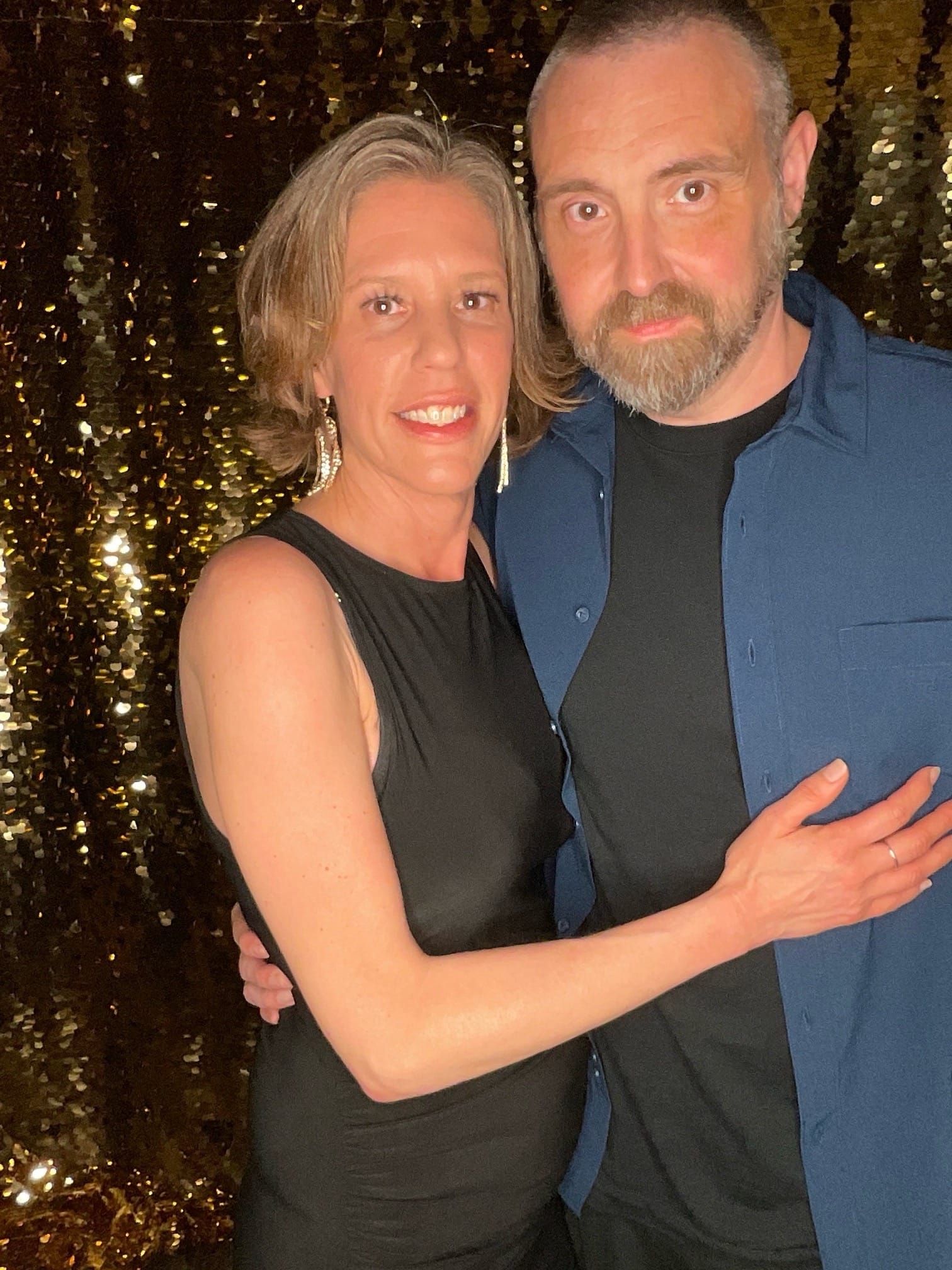
Some things happened only to one of us. Some things surprised us differently.
But there are experiences that belong to both of us—the overlaps where our individual journeys intersected and changed what we understood about the medication, ourselves, and each other.
We Somehow Both Overshot
Despite taking very different paths, we reached almost the same conclusion at almost the same time: we had each become too thin.
That's not a complaint—it's an observation that one person's target weight might not be another person's, even when both people are taking the same medication.
Food Stopped Being Compelling
The way we eat changed. The foods we want changed. The foods that taste "normal" changed. Meals that used to be exciting became logistical problems:
How do I eat enough protein when food doesn't particularly interest me?
Alcohol Wasn't the Answer Anymore
We expected that once we felt physically better and became visible again, we'd want to go out—to restaurants, to social events, to do normal adult things.We were partially right.
We wanted to go places. We didn't consider that going out with friends revolves heavily around two things that had become far less interesting to us: elaborate food and alcohol.
So we're figuring out what social life looks like now.
Energy Stayed Complicated
We both experience fatigue that doesn't fully disappear, even when we're eating adequately, sleeping well, and not losing weight anymore. We don't have a clean explanation for this yet. But it's something we're still navigating.
Maintenance Is Harder Than Losing
Losing weight felt surprisingly straightforward: take the medication, appetite decreases, weight drops.
Stopping the weight loss—maintaining without continuing to decline—is genuinely complex. The questions changed from "How quickly am I losing?" to "Why is my body still fighting to get smaller?" and "How do I actually eat enough when eating isn't compelling?"
Where We Are Now
We are two years and several months into this.
We're not trying to lose another 50 pounds. We're trying to understand what living in a dramatically changed body looks like long-term.
The questions that matter now:
- How do we maintain stability without continued weight loss?
- What muscle can we realistically rebuild, and is it worth the effort?
- Why does energy fluctuate even when nutrition is solid?
- What happens when appetite suppression becomes stronger than we actually want?
- How much does body image settle, and how much stays complicated?
- What does eating look like when food isn't particularly motivating?
- What does a social life look like when it doesn't revolve around food and alcohol?
- What happens if we stop the medication?
Some of these have research-backed answers. Some have incomplete answers.
Some are things we're just noticing in real time.
We'll tell you which is which.
How This Works
Two Nurses, One Journey is built on a specific principle: Experience asks the question. Evidence investigates it.
The Personal Side (This Section)
Our stories, in our own words. What we noticed. What surprised us. What we're still figuring out. What we got wrong. What happened differently than we expected.
This is not evidence. This is testimony.
The Evidence Side (The Rest of GLP Logic)
When our experience raises a medical or scientific question, we investigate it separately using peer-reviewed research, clinical trials, and expert sources.
Being nurses informs the questions we ask. It does not turn our personal experiences into evidence.
And when research doesn't have a good answer, we say so.
Follow Our Journey
We started GLP-1 treatment together and experienced it very differently. Explore our honest stories about changing food preferences, unexpected body changes, muscle, body image, relationships, maintenance and the realities no before-and-after photo can show.
One Journey. Multiple Perspectives.
You'll encounter three types of stories here:
Marcia's Journey: What happened to Marcia, told by Marcia, in her own voice and memory
Dan's Journey: What happened to Dan, told by Dan, in his own voice and memory
Our Journey Together: Where our experiences overlap, complement, contradict, or affect each other
We don't expect our memories to perfectly align. Sometimes we remember things differently. That's fine—we're documenting what actually happened to two real people, not creating a perfectly clean case study.
Personal ≠ Evidence
This is important, so we're saying it clearly:
Our nurses' licenses and clinical experience inform the questions we ask and the standards we use to evaluate research. They do *not* make our personal experiences into evidence.
When we discuss research findings, medication safety, clinical recommendations, or health facts, we source and vet those claims separately.
When research hasn't answered a question yet, we say that too.
Why This Exists
You can find before-and-after photos everywhere. You can find success stories.
You can find people who took a GLP-1 and lost 100 pounds and felt amazing.
You can find fewer places that honestly explore:
- What happens when you overshoot and become too thin
- Why hair loss happens and how long recovery takes
- What you do when reduced appetite makes it hard to eat enough- Whether muscle loss matters and how to address it
- How body image actually changes after dramatic weight loss
- What maintenance feels like when it's not working
- Why some medication effects don't behave the way you expected
- What social life looks like when food isn't at the center anymore
This project exists because those questions matter, and they deserve honest exploration—not just "I lost 100 pounds and my life is perfect now."
Real life is messier. More interesting. Worth documenting as it actually happens.
Ready to Start?
If you're new here, begin with the first chapter:
[Why We Started Tirzepatide—and Why We're Still Talking About What Happened After →]
Then follow the journey from there, or jump to whichever chapter speaks to your question.